

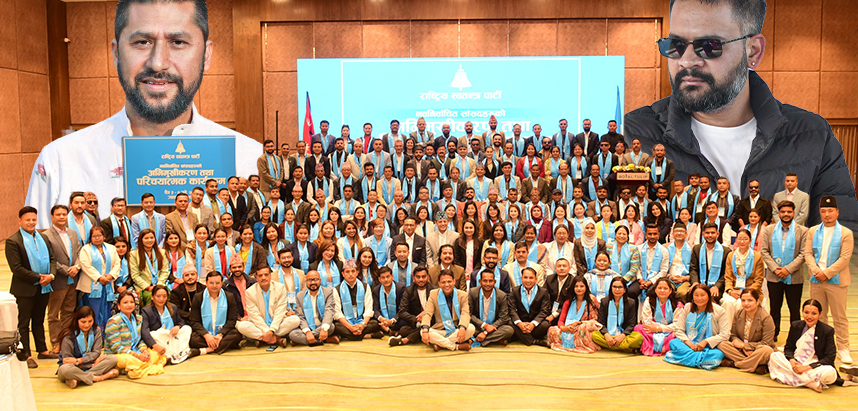
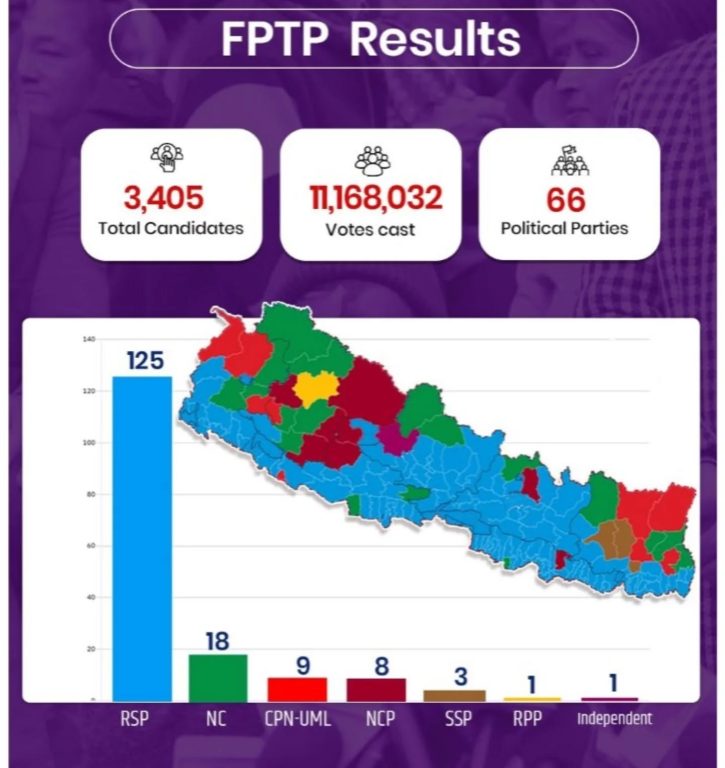
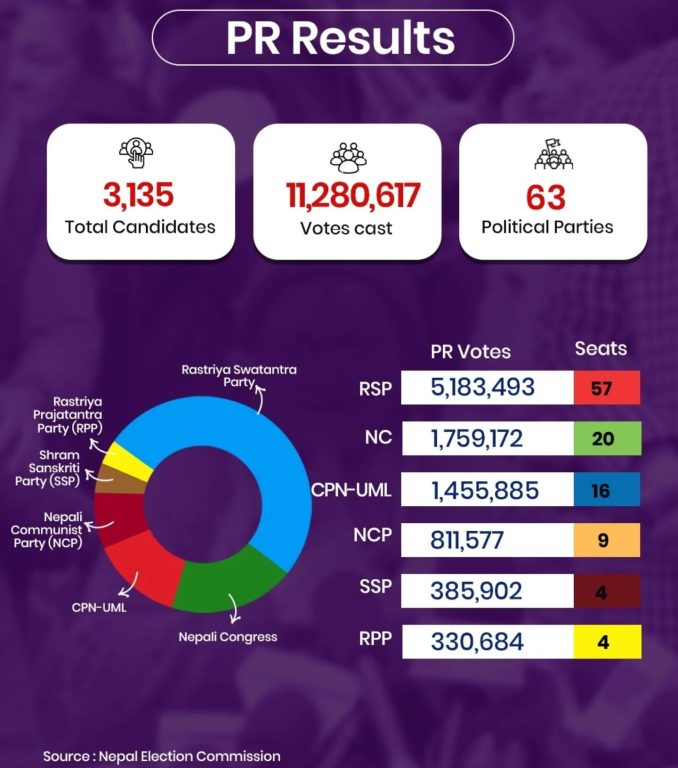
Kathmandu : For the first time since the promulgation of the Constitution, the Rastriya Swatantra Party (RSP) has become the first party to secure a clear single-majority opportunity to form a government. While 138 seats are required for a majority, the people have given RSP a total of 182 seats through direct and proportional representation — marking a historic shift in Nepali politics.
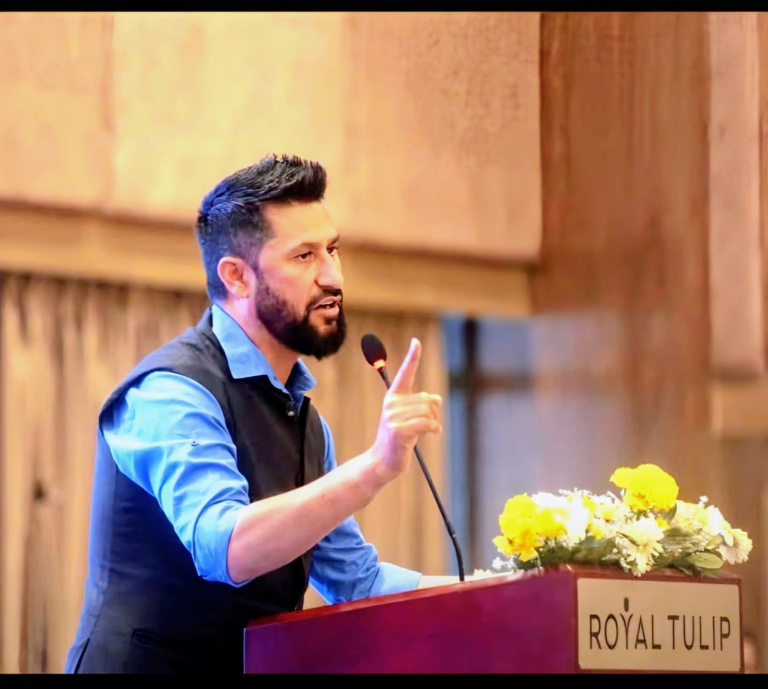
Unlike traditional parties, very few RSP MPs have long political careers. Instead, the parliamentary team is dominated by professionals and experts from diverse fields: lawyers, Gen-Z activists, doctors, engineers, former journalists, ex-security personnel, writers/literary figures, social activists, artists, economists, infrastructure specialists, and representatives of marginalized communities.
Rabi Lamichhane — The Only Leader to Win the Same Constituency Three Times
Party Chairperson Rabi Lamichhane won Chitwan-2 for the third consecutive time. After founding RSP in June 2079 (2022), he contested and won in the November 2079 general election. Following the loss of his parliamentary seat due to citizenship and passport controversies, he won again in the April 2080 by-election with a huge margin. This time too, he secured victory by a landslide. He is the first RSP leader to contest and win from the same constituency three times.
DP Aryal — From Acting Chairperson to Direct Winner
Vice-Chairperson DP Aryal won directly from Kathmandu-9 this time with a massive margin. Previously elected through proportional representation, he served twice as Labour Minister. During Rabi’s imprisonment, Aryal acted as interim chairperson. Before entering politics, Aryal was active in the travel industry and ran a business in Japan. His close association with Rabi predates the formation of RSP; he is one of the founding vice-chairpersons.
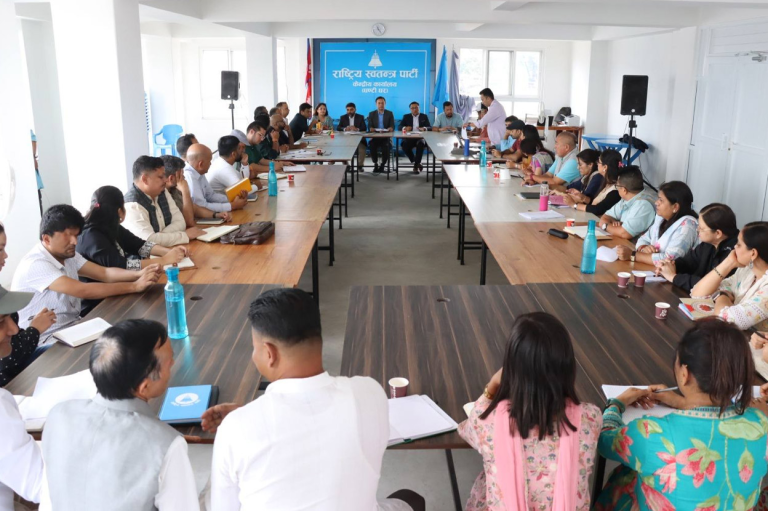
Swarnim Wagle — Economist to Vice-Chairperson
Former Nepali Congress leader Swarnim Wagle won Tanahun-1 for the second time. Educated at the London School of Economics, Harvard University, and Australian National University, he previously served as a member and vice-chairperson of the National Planning Commission and as UNDP Asia-Pacific’s chief economic advisor. After Ram Chandra Paudel became President, Swarnim won the by-election in Tanahun-1 and increased his margin significantly this time. He was elected vice-chairperson at RSP’s Jaleshwar meeting and heads the party’s Economic Policy Department.
Kavindra Burlakoti — Second Attempt Success in Gorkha
General Secretary Kavindra Burlakoti won Gorkha-2 on his second attempt after losing in the previous election. Following the removal of founding General Secretary Mukul Dhakal, Burlakoti assumed the post. A founding joint general secretary, he also heads the Organization Department.
Bipin Acharya — Defeated UML General Secretary
Joint General Secretary Bipin Acharya defeated UML General Secretary Shankar Pokharel in Dang-2 with a huge margin in his first direct contest. Previously Creative Director at Galaxy TV (where he worked with Rabi), Bipin designed RSP’s primary election system.
Biraj Bhakta Shrestha — From Bibeksheel to Second-Time MP
Former Bibeksheel Sajha provincial assembly member Biraj Bhakta won Kathmandu-8 for the second time. He served as Minister for Youth and Sports during RSP’s previous government.
Lima Adhikari — Daughter of Late UML Leader Bharat Mohan
Treasurer Lima Adhikari enters parliament for the first time. She previously served as Bagmati in-charge and is the daughter of late leader Bharat Mohan Adhikari.
Basumaya Tamang — Entrepreneur
Deputy Treasurer Basumaya Tamang was elected through proportional representation. An entrepreneur, she produces and sells pickles domestically and internationally, employing over 70 women.
Deepak Bohara — Rabi’s Trusted Aide
Deepak Bohara won Kanchanpur-2 in his first electoral contest, defeating his rival by a huge margin. A close aide to Rabi since News-24 TV days, he previously served as deputy treasurer and is now a secretariat member. He coordinated the nationwide and international signature campaign in support of Rabi during the political vendetta case.
Manish Jha — Former Spokesperson
Elected from Dhanusha-3, Manish Jha was a proportional MP in the previous parliament and served on the Public Accounts Committee. After the former general secretary and spokesperson were removed, he assumed the spokesperson role.
Shishir Khanal — Former Education Minister
Shishir won Kathmandu-6 for the second time. Head of RSP’s Foreign Department, he briefly served as Education Minister and was associated with Teach For Nepal.
Tosima Karki — Second-Time Doctor MP
Dr. Tosima Karki won Lalitpur-2 again. She previously served as State Minister for Health and Population.
Pratibha Rawal — Behind-the-Scenes Warrior
Pratibha Rawal, elected through proportional representation in the Khas-Arya category, is a founding member who worked closely with Rabi on television and in his secretariat. Known for working behind the scenes, she supported Rabi during his legal battles.
Ramesh Prasai — Former Television Professional
Ramesh Prasai was elected proportionally in the Khas-Arya category. Like many others, he has a background in television.
Sovita Gautam — Advocate and TV Producer
Sovita Gautam won Chitwan-3. An advocate with a law degree, she also has experience as a television program producer and presenter.
Ganesh Karki — Social Media Writer
Ganesh Karki won the Morang–3 constituency. He is a writer and a member of the party’s central committee, and is also alleged to have been involved in the Parliament building firing incident.
Nisha Dangol — Youngest MP in Previous Parliament Nisha, who was the youngest MP in the previous parliament through proportional representation, won Jhapa-1 this time.
Balen Shah — From Mayor to Prime Ministerial Candidate
Former Kathmandu Mayor Balendra Shah (Balen) contested Jhapa-5 and defeated UML Chairperson and former PM KP Sharma Oli by nearly 50,000 votes. After initial talks for unification, Balen received the senior leader position (second rank) in RSP. Presented as the prime ministerial candidate, he helped RSP secure nearly two-thirds of the popular vote.
Sunil Lamsal — Balen’s Former Infrastructure Ally
Sunil Lamsal won Rupandehi-1. An engineer, he assisted Balen in urban infrastructure during his mayoral tenure and now serves as General Secretary.
Sasmit Pokharel — Strategist
Sasmit won Kathmandu-5. A former advisor to Balen at Kathmandu Metropolitan City and coordinator of Students for Liberty.
Sushant Baidik — International Scholar
Sushant won Pyuthan. A graduate of the London School of Economics, he previously served as an expert advisor to Lumbini Province government.
Sagar Dhakal — Energy Expert
Sagar won Gulmi-1. With over 10 years in energy and water resources, he holds an MSc from Oxford University.
KP Khanal — Cleanliness Activist
KP won Kailali-2. Known for campaigns like Clean Kathmandu and Kathmandu Trash Collection.
Khagendra Sunar — Dalit Activist
Khagendra won Banke-3. Founder of “Dalit for Dalit Campaign” and former leader of Hamro Party Nepal.
PhD Holders in Parliament (9)
RSP has nine PhD holders among its MPs: Dr. Swarnim Wagle (Economics), Dr. Amaresh Kumar Singh (International Relations), Dr. Bikram Timilsina (Politics & IR), Dr. Achyutam Lamichhane (Sports & Exercise Psychology), Dr. Krishna Hari Budhathoki (Development Economics), Dr. Dhananjay Regmi (Environmental Earth Science), Dr. Anand Bahadur Chand (jointly with US university), Dr. Tara Prasad Joshi (International Politics & Diplomacy), and Dr. Ram Lama (Hydropower Engineering).
Doctors and Health Professionals in Parliament
RSP sent multiple doctors and health workers to parliament: Dr. Lekhjung Thapa (senior neurologist), Dr. Tosima Karki, Dr. Anand Bahadur Chand (public health), Dr. Deepak Kumar Shah (ophthalmologist), Dr. Shambhu Kumar Yadav, Asha Jha (health volunteer), Dr. Ankita Thakur (dentist), and Dr. Ojashwi Sherchan (biochemistry).
Celebrity MPs Rima Bishwakarma (journalist, actress, Nepal Idol host), Anushka Shrestha (Miss Nepal, entrepreneur, founder of Makusi chocolate), Rajani Shrestha (national bodybuilder).
Transgender Representation Bhumi Shrestha is set to become Nepal’s first transgender woman MP.
So-called Gen-Z MPs (12) : Rachana Khatri (mother of martyr Rasik Khatri), Prashant Upadhyay (youngest MP), Manish Khanal, Sulabh Kharel, Shraddha Kunwar, Aakriti Awasthi, Srishti Bhattarai, Smriti Senchury, Karishma Kathariya, Purushottam Shubrabhat Yadav, Sudhan Gurung.
Engineers in Large Numbers : Tapeshwar Yadav, Sagar Dhakal, Arvind Sah, Sushil Khadka, Sunil Lamsal, Jagadish Kharel, Shriram Nyaupane, Ramji Yadav, Deepak Kumar Shah, Ujjwal Kumar Jha, Khagendra Karn.
Former Security Personnel (5) : Former AIG Bishwaraj Pokhrel (Okhaldhunga), former SSP Bikram Singh Thapa (Kapilvastu-2), former DSP Govinda Panthi (Gulmi-2), former Kathmandu Police Chief Raju Nath Pandey, Shambhu Suskera (Jhapa-4).
RSP’s 182-member parliamentary team represents a radical departure from conventional Nepali politics — a blend of youth energy, professional expertise, marginalized voices, and anti-establishment sentiment. This diverse group now holds the responsibility to lead the nation’s first single-majority government in the post-constitution era — ushering in what many hope will be a new chapter in Nepal’s democratic journey.
The ‘Balen Effect’ Goes Global: How a 35-Year-Old Rapper Turned Mayor Became Nepal’s Political Earthquake
Kathmandu — For the first time in decades, Nepal has captured sustained international attention in this general election. The dramatic collapse of long-dominant political parties and the unprecedented rise of new political forces have thrust one name into the global spotlight more than any other: Balendra Shah — widely known as Balen.
Balen, the 35-year-old former rapper and mayor of Kathmandu Metropolitan City, has become the defining symbol of Nepal’s emerging new political force. The Rastriya Swatantra Party (RSP), which he joined and helped elevate, secured a historic 182 seats out of 275 in the House of Representatives — the largest single-party mandate in modern Nepali history.
International media outlets have dubbed the phenomenon the “Balen Effect” — describing his journey from underground rapper to potential prime minister as a story of generational revolt against entrenched dynastic politics.
From Rapper to Revolutionary Mayor to National Icon Balen first entered politics as an independent candidate in the 2022 local elections, winning the mayoral seat of Kathmandu with a bold anti-corruption, pro-youth and heritage-preservation platform. During his tenure, he focused on street cleanliness, cultural heritage protection, zero tolerance for corruption, and youth employment initiatives. In 2023, Time magazine included him in its prestigious TIME100 Next list — recognizing 100 emerging leaders shaping the future.
His visibility exploded during the Gen-Z uprising of September 2025 (known locally as the “Gen-Z Uprising” or “Jenzhi Andolan”). Sparked by social media bans, corruption scandals and mass unemployment, the movement saw 77 unarmed civilians killed in police firing, ultimately toppling the KP Sharma Oli government. Balen openly supported the protests; his songs became unofficial anthems of the movement. Many Gen-Z activists named him their first choice for interim leadership.
After the uprising forced early elections (widely called the “Gen-Z Election”), RSP positioned itself as the political heir to the revolt. Balen’s high-profile entry into the party further electrified the campaign.
Global Media Spotlight: “Rapper to PM” Narrative
International coverage has framed Balen’s rise as a once-in-a-generation disruption:
- Al Jazeera (March 12, 2026) described RSP’s victory as the direct outcome of the 2025 Gen-Z uprising. The report highlighted Balen’s dual identity — “former civil engineer and hip-hop artist” — as the perfect symbol of a young generation breaking the 70-year dominance of elderly leaders.Journalist Pranay Rana told Al Jazeera: “Balen represents the outsider spirit that Nepali youth have been craving — someone who challenges the status quo without fear.”
- BBC (March 7, 2026) called the result an “election shock” and “political earthquake.” It noted that under Nepal’s mixed electoral system (first-past-the-post + proportional), no single party was expected to secure a majority. RSP’s 182-seat sweep defied every prediction and offered new hope for political stability after years of coalition instability.The BBC emphasized that voters rejected familiar faces and embraced new, youthful leadership.
- The New York Times (March 10, 2026) portrayed Balen’s rise as a “tectonic shift” in Nepal’s traditional political structure — driven by the Gen-Z generation. The paper described him as “fearless and combative,” noting how he used digital platforms and social media for direct voter engagement instead of conventional rallies.The NYT called him an “algorithm-born leader” and labeled RSP’s mandate “historic and overwhelming.” It warned that the massive public expectation now places enormous pressure on Balen to deliver — while also noting that his victory could inspire similar youth-driven movements across South Asia.
- Times of India (March 9, 2026) likened Balen’s journey to a movie script — “from underground rapper to executive head of the nation.” The report credited his use of music and art as political tools to mobilize youth and dismantle entrenched family dynasties and traditional power structures.It also discussed potential geopolitical implications, particularly Balen’s nationalist stance on border disputes with India.
- Reuters highlighted RSP’s sophisticated, data-driven, digital-first campaign strategy — prioritizing targeted online messaging over expensive mass rallies. It described Balen’s dual persona — creative rapper and technical civil engineer — as the key to his broad appeal: artistic enough to inspire youth, technical enough to promise real governance solutions.
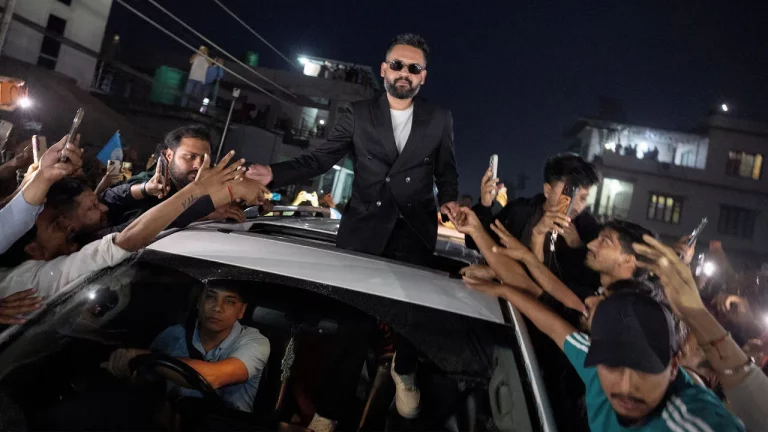
Influencers, Podcasters & Hip-Hop Community React Social media platforms exploded with the “Balen Effect”:
- On X (formerly Twitter), users posted celebratory messages like: “Balen Shah wins Jhapa-5. New thinking, honest leadership, good governance — congratulations for positive change.”
- The Nepali Fever Facebook page criticized some international outlets for under-reporting Balen’s full story.
- Spotify podcast “Nepal Uncovered: Travel Podcast” analyzed RSP’s manifesto, especially its promise of a one-window digital permit system for tourists — seen as a major relief for trekkers and adventure travelers.
- Influencers framed the victory as youth empowerment. Indian influencers jokingly compared Balen to MC Stan: “If a rapper can run a country, why not us?”
- The global hip-hop community embraced Balen. “All Hip Hop” published stories under headlines like “Rapper Balen Shah Set to Become Nepal’s Prime Minister.”
Challenges Ahead
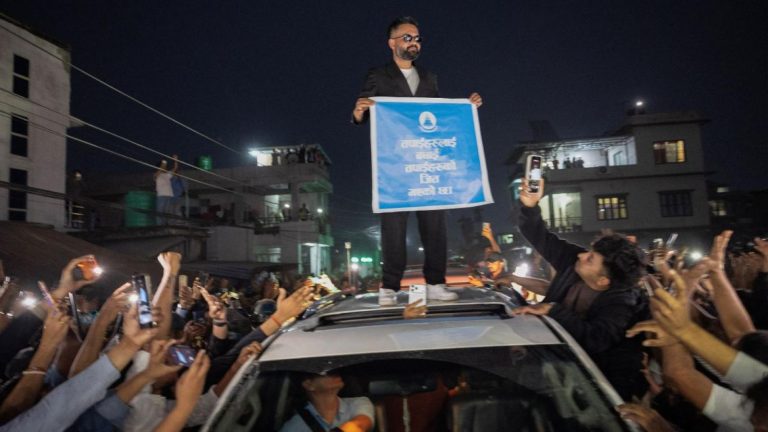
While international praise has been widespread, analysts warn of serious challenges:
- Balen has only three years of governance experience as mayor.
- He will lead amid ongoing Middle East conflicts, global power shifts and complex diplomacy.
- Council on Foreign Relations analyst Joshua Kurlantzick noted that while Balen is seen as a clean, non-corrupt outsider, his relative inexperience in high-level politics and diplomacy could become a vulnerability.
- DW (Deutsche Welle) called it the “Balen Effect,” quoting Nepali analyst Krishna Khanal: “RSP’s massive victory was centered around Balen. When the party declared him the prime ministerial candidate, it created a deep impact on voters.”
The Gen-Z uprising gave birth to this moment. Balen supported the movement but strategically backed former Chief Justice Sushila Karki for interim leadership — a move that enhanced his image and allowed him to focus fully on the election.
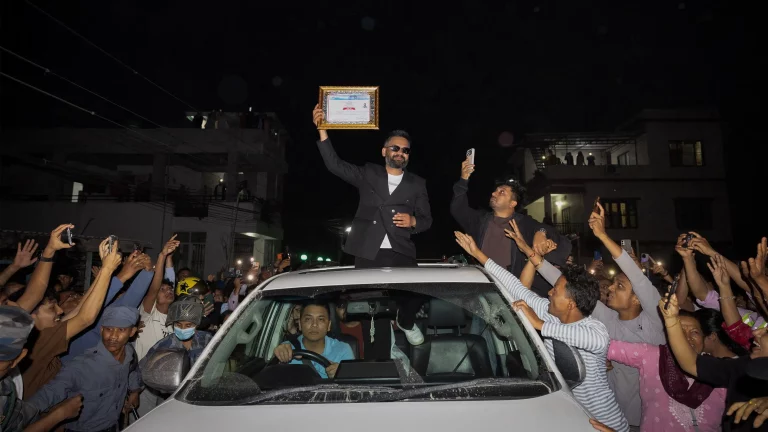
Now, at potentially the youngest prime minister in Nepal’s history, Balen carries the dreams of a generation — and the enormous pressure to deliver real change. Whether the “Balen Effect” reshapes Nepal — or becomes another chapter of unfulfilled hope — the world is watching.


प्रतिक्रिया दिनुहोस्