

The Growing Distance Between Nepal’s Prime Minister and the House
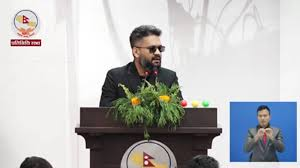
Kathmandu — In parliamentary democracies, the legislature is often described as the heart of accountability. It is where prime ministers defend policies, answer questions, and face scrutiny from elected representatives. But in Nepal, a new political debate is gaining momentum: Why does Prime Minister Balen Shah appear increasingly reluctant to engage with Parliament?
The question resurfaced this week after Balen skipped a crucial parliamentary session where he was expected to respond to lawmakers’ questions on the budget allocations of agencies under his direct responsibility, including the Prime Minister’s Office and the Ministry of Defense. Instead, Finance Minister Dr. Swarnim Wagle answered on his behalf.
While parliamentary leadership allowed the arrangement, opposition lawmakers questioned whether such a practice respects the spirit of parliamentary accountability.
A Pattern, Not an Exception
This was not an isolated incident.
Over the past several months, Prime Minister Balen has repeatedly been absent from key parliamentary proceedings. He was missing during important discussions on the government’s policy and program, avoided direct responses to controversies surrounding his own statements, and has rarely participated in the regular question-and-answer mechanisms designed to hold the prime minister accountable.
Political observers note that occasional absences may be understandable. However, when absences become a recurring pattern, they inevitably create a political narrative.
That narrative is now raising uncomfortable questions about the government’s relationship with Parliament itself.
Direct to the People, Not Through Parliament?
Balen’s political rise was built on an anti-establishment image. Unlike traditional politicians who emerged through party structures and parliamentary politics, he built his reputation through public campaigns, social media engagement, and direct communication with citizens.
Some analysts believe that this political background may explain his apparent discomfort with parliamentary culture.
Parliament is built on procedure, debate, negotiation, and often confrontation. Social media, by contrast, allows leaders to communicate directly with supporters without facing immediate criticism from opponents.
Critics argue that Balen appears more comfortable speaking to the public than speaking before Parliament.
Supporters, however, see it differently. They argue that citizens care more about results than speeches and that the Prime Minister’s focus should remain on governance rather than political theater.
Accountability Under Scrutiny
The controversy goes beyond attendance records.
Constitutional experts emphasize that parliamentary democracy requires more than electoral legitimacy. It requires continuous accountability to elected representatives.
In most democratic systems, prime ministers are expected to personally defend government policies, answer difficult questions, and explain controversial decisions.
When those responsibilities are delegated repeatedly to other ministers, critics say the principle of ministerial accountability begins to weaken.
“The person making the decisions should also be the person answering for them,” one former parliamentary official remarked during the debate.
Parliament’s Own Test
The controversy is also becoming a test for Parliament itself.
If the Prime Minister can repeatedly avoid direct appearances without significant consequences, questions naturally arise about the strength of Nepal’s parliamentary institutions.
Opposition parties have increasingly demanded that Balen personally appear before lawmakers. At the same time, critics have begun questioning the role of the Speaker and the ruling coalition in enforcing parliamentary norms.
The issue is no longer just about one leader’s attendance. It is becoming a broader discussion about how Nepal’s democratic institutions function.
Political Strategy or Political Risk?
Some observers believe Balen’s approach is strategic.
Parliament is an unpredictable arena. A single statement can dominate headlines, create controversy, and generate weeks of political fallout. In recent months, several of the Prime Minister’s comments have sparked heated debates, particularly on foreign policy and border-related issues.
By limiting his appearances, Balen may be attempting to avoid unnecessary political distractions.
Yet such a strategy carries risks.
While it may reduce short-term controversies, it can also create an impression that the Prime Minister is unwilling to face scrutiny.
And in parliamentary democracies, perception often becomes political reality.
The Bigger Question
Ultimately, the debate is about more than Balen Shah.
It is about the relationship between popular leadership and democratic institutions.
Can a leader maintain direct communication with citizens while still respecting parliamentary traditions?
Can social media engagement substitute for parliamentary accountability?
And perhaps most importantly: Can Parliament remain the center of democratic decision-making if the country’s most powerful elected official increasingly chooses to stay away from it?
Those questions are likely to remain at the center of Nepal’s political conversation long after this week’s parliamentary session ends.


प्रतिक्रिया दिनुहोस्