


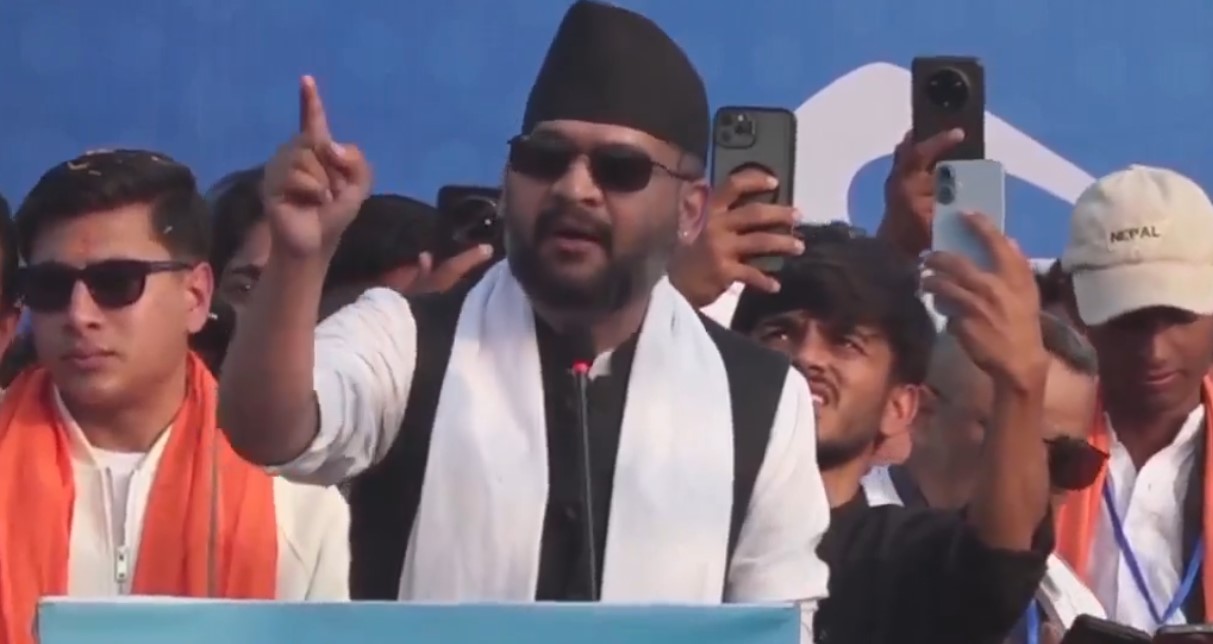
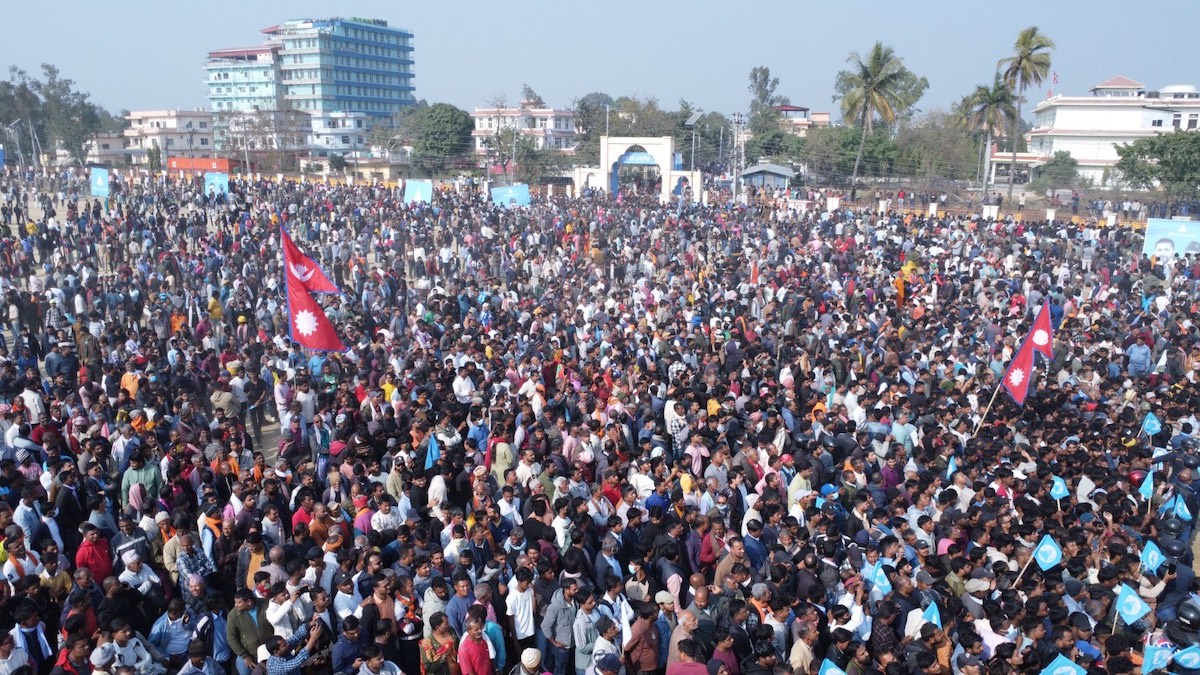
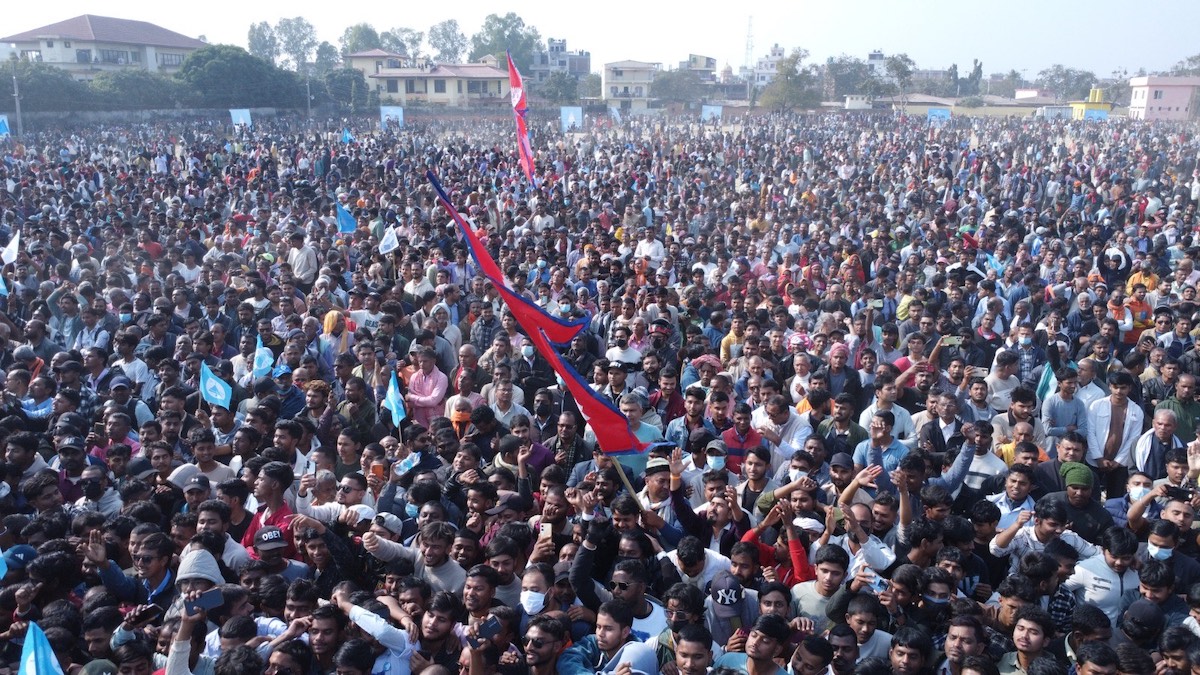
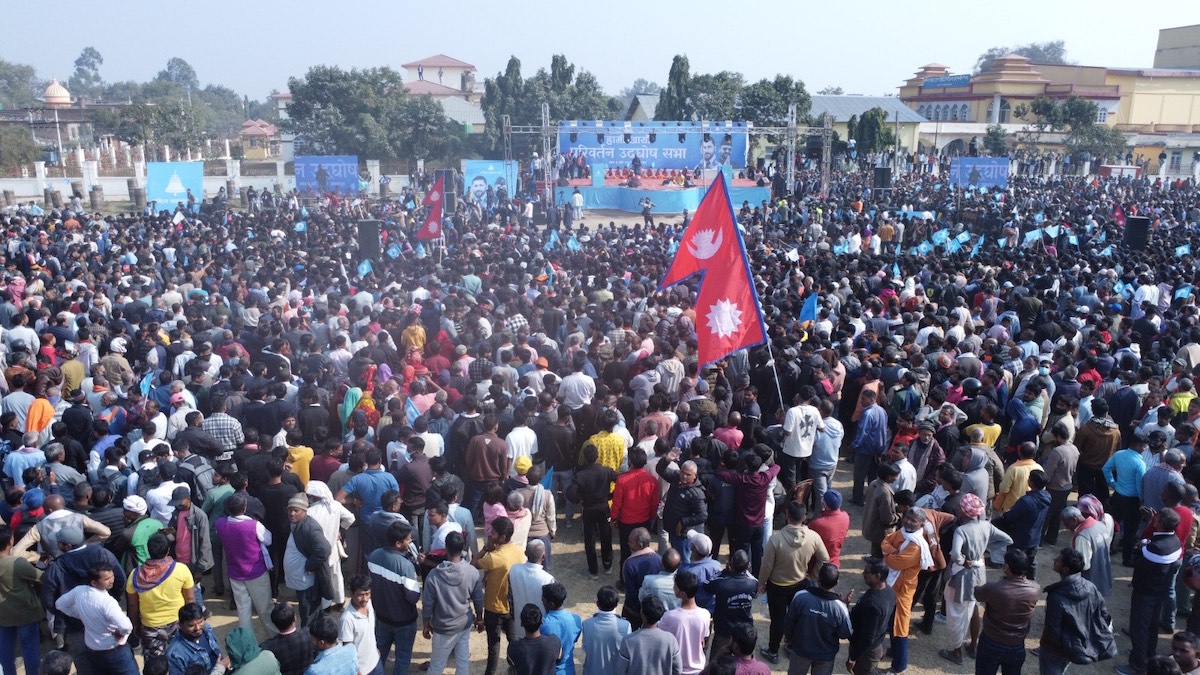
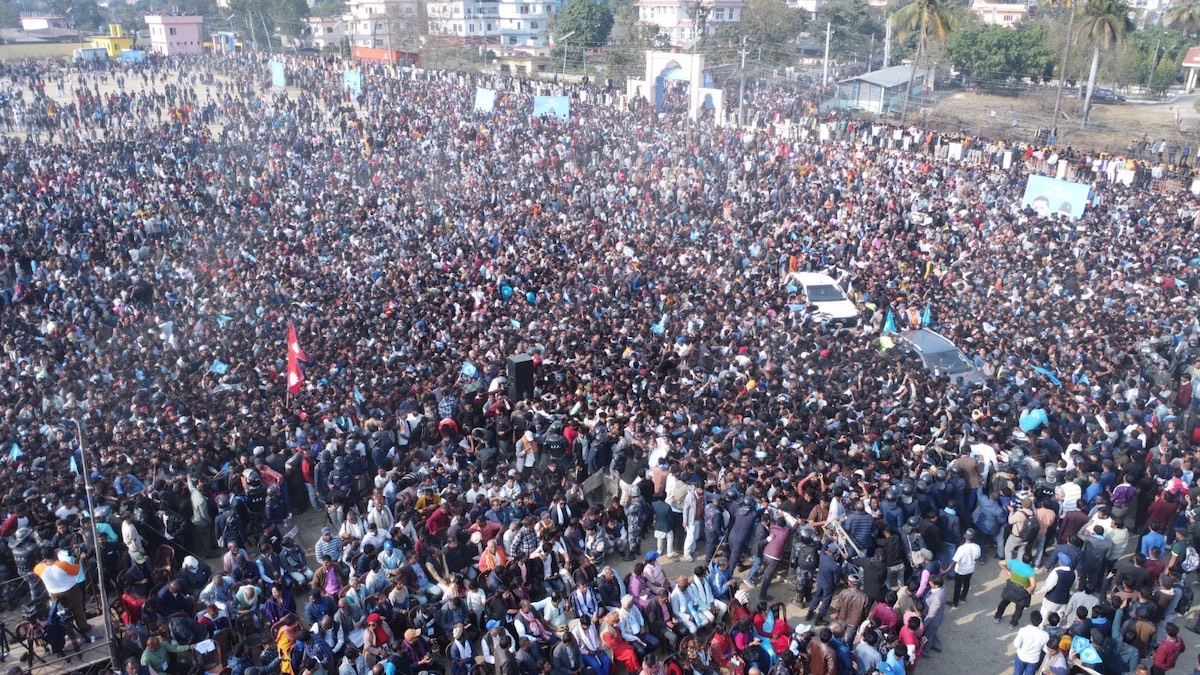
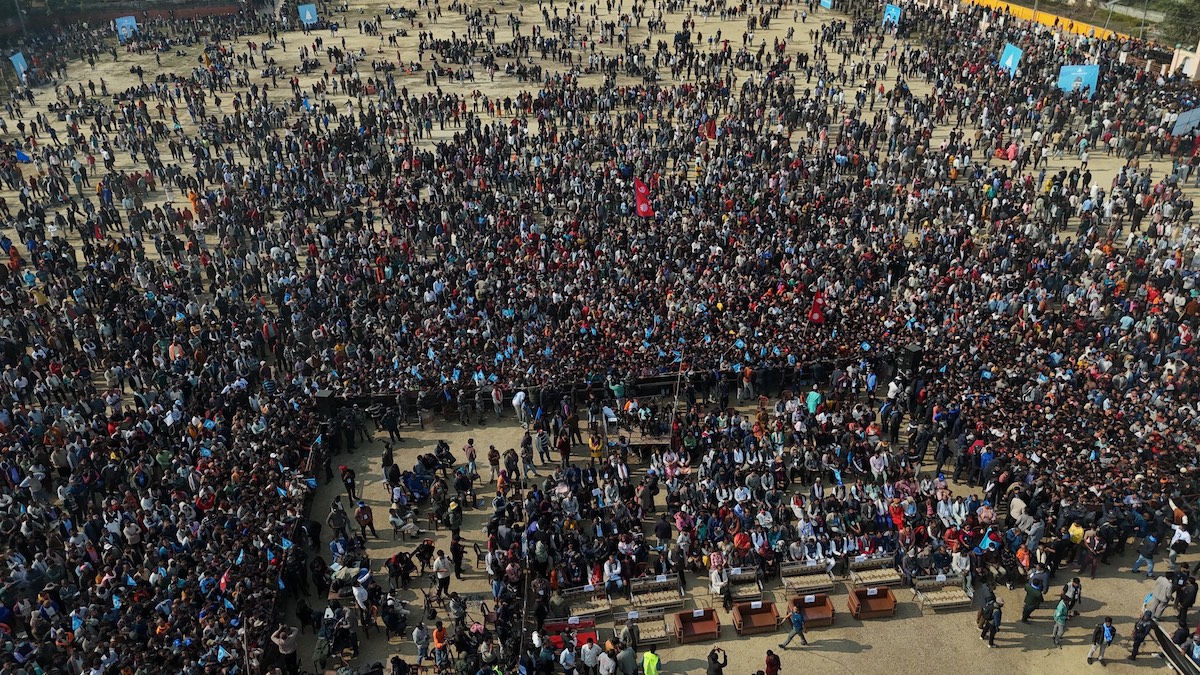
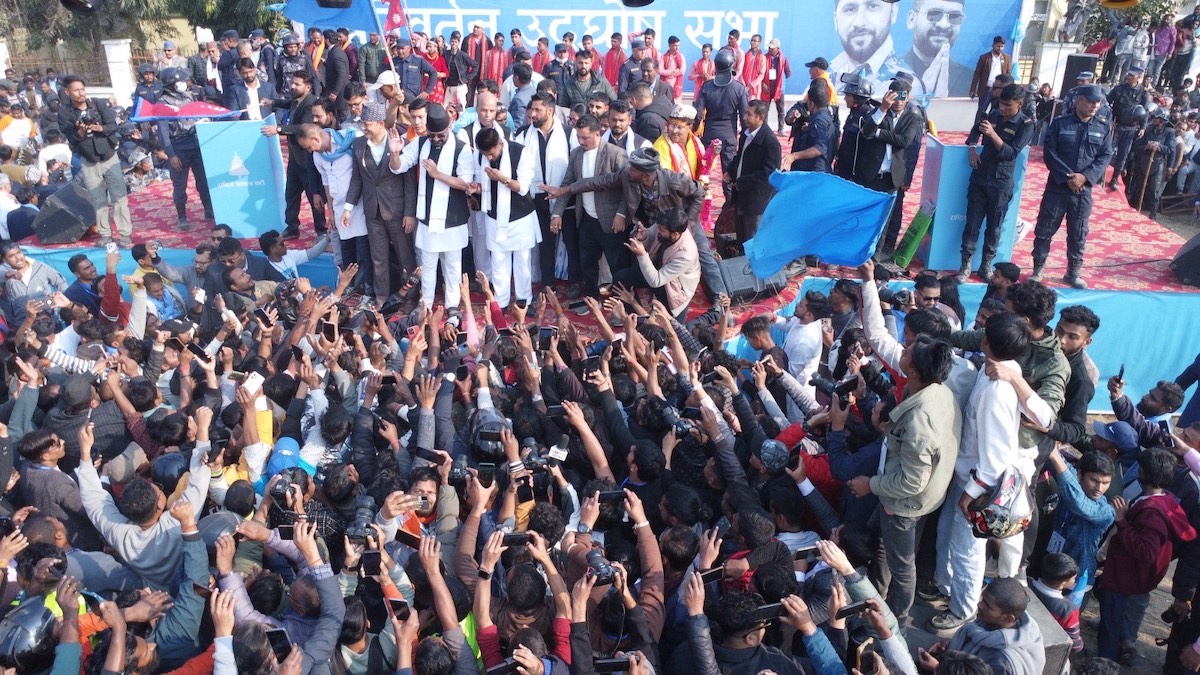
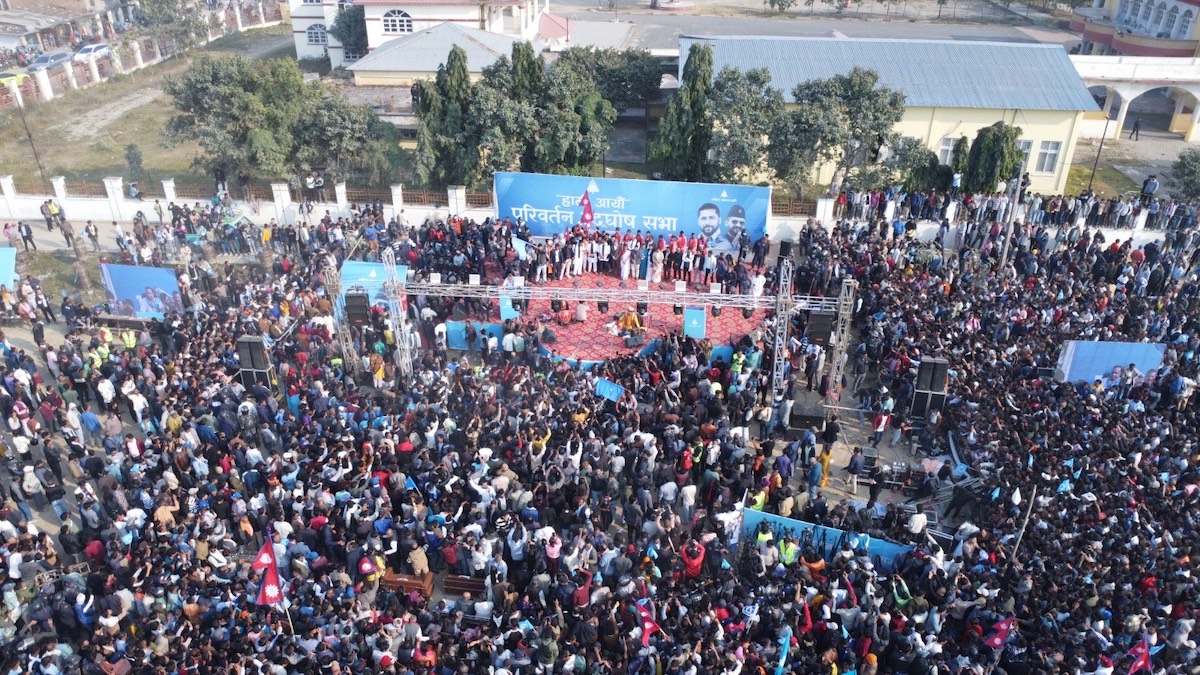
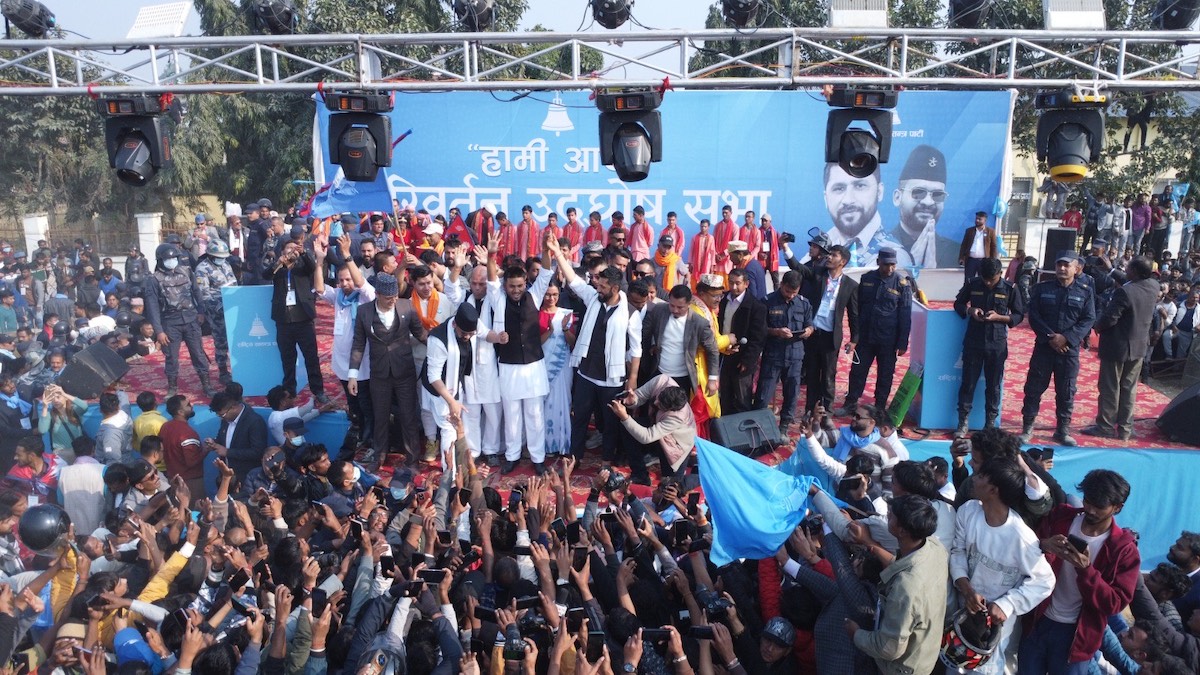
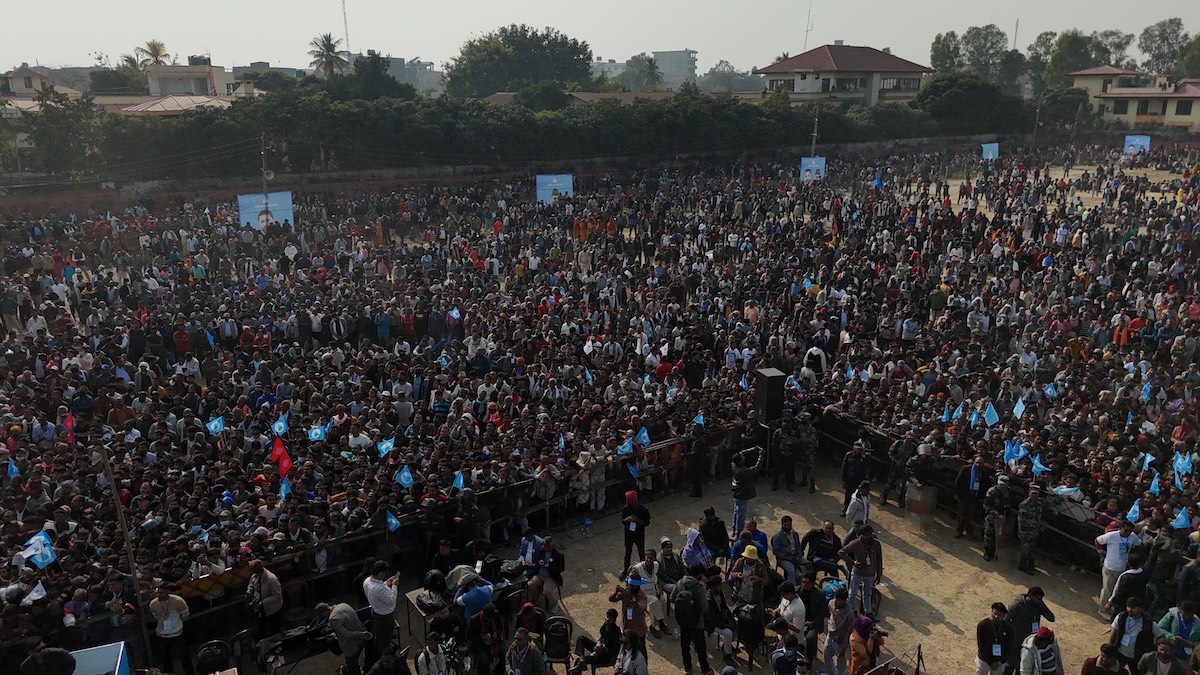
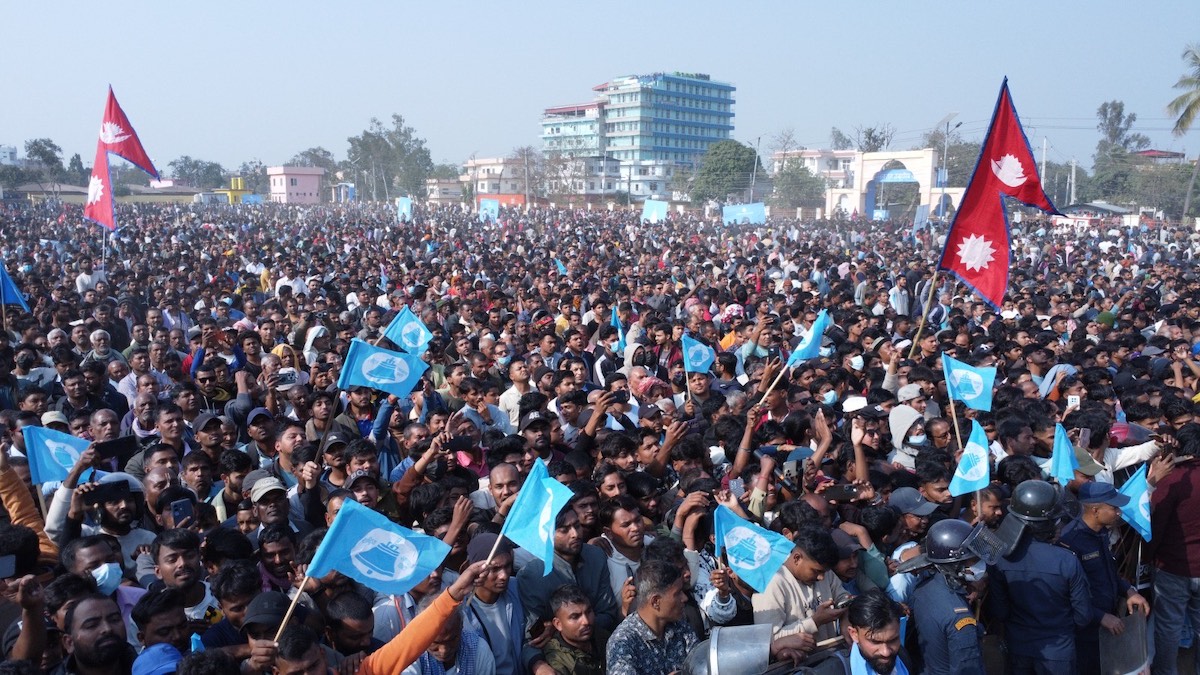
Kathmandu, January 20, : The massive crowd that turned out for Balendra Shah (Balen)’s first election rally as Rastriya Swatantra Party (RSP)’s prime ministerial candidate in Janakpur was striking — yet the party’s signature “Ghanti” (bell) symbol and flags were conspicuously absent.
Attendees confirmed the gathering wasn’t driven by deep RSP loyalty. Few carried the bell emblem or party banners; people came primarily to see Balen in person — the young leader who surged during the Gen Z uprising and was once discussed as a potential prime minister. Youth from Madhesh especially wanted to see this “Madheshi-born” figure who captured national imagination amid protests.
Ironically, Balen admitted in the Janakpur address that he “doesn’t know anyone in Madhesh.” As Kathmandu mayor, he drew criticism for not permitting sugarcane farmers from Madhesh to hold extended sit-ins at Khulamanch or on city streets during repeated demands for unpaid dues. Even as mayor, he provided no special platform or support to the Madheshi community in the capital, often citing jurisdictional limits while meter-bylaw victims protested daily at Maitighar Mandala.
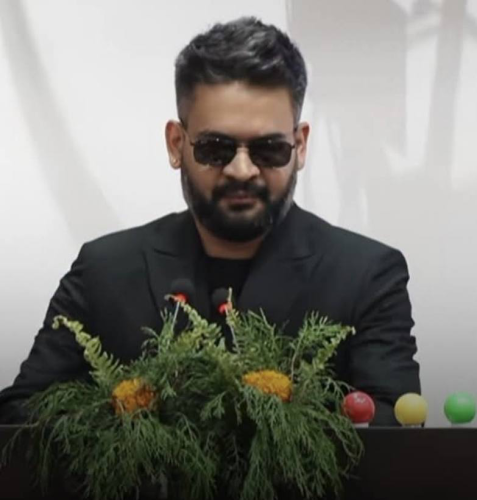
Critics argue this pattern reveals more personal ambition than genuine regional engagement. His youth appeal comes from his rapper persona — stylish, outspoken, and viral — but concrete backing for protesting farmers or Madheshi issues has been limited.
In his partly Maithili speech in Janakpur, Balen pledged to end Kathmandu-centric governance, empower provinces, and ensure routine administrative work no longer requires travel to the capital. He quipped: “Don’t come to Kathmandu demanding rights — go visit Pashupatinath or Swayambhu instead.”
The stakes have escalated dramatically. Balen resigned as Kathmandu mayor on January 19 to enter national politics full-time, securing RSP’s ticket to contest the March 5 parliamentary elections from Jhapa-5 — a longstanding stronghold of CPN-UML chairman and four-time former Prime Minister KP Sharma Oli. Both are now their parties’ declared prime ministerial candidates, setting up a high-profile generational showdown: the 35-year-old independent-turned-RSP figure versus the 74-year-old veteran in Oli’s home constituency.
Oli has downplayed Balen’s chances, pointing out the young leader’s lack of local roots, family ties, or name recognition in Jhapa beyond his signature beard. Balen’s team has begun constituency surveys, with aides claiming solid youth backing. This race in Jhapa-5 has become Nepal’s most-watched contest, pitting old-guard politics against Gen Z-fueled calls for change.
Adding fuel to the fire, even as Balen positions himself as RSP’s prime ministerial face following his December 2025 pact with party chair Rabi Lamichhane, internal dissent is brewing over ticket distribution. In several potential strongholds, RSP supporters and local leaders have publicly disagreed with Balen-backed candidates, sparking mini-rebellions and accusations of favoritism. Many of the candidates Balen has pushed forward are seen as having former royalist leanings or affiliations, raising eyebrows among the party’s anti-establishment base.
In Madhesh specifically, controversial figures like Amresh Singh and Rabhavar Ansari — often labeled opportunists with checkered pasts and disputed reputations — have joined RSP under this new alignment. Their entry has intensified debates, as questions swirl around their views on federalism and secularism, which some describe as controversial or inconsistent with RSP’s earlier progressive image.
The Janakpur turnout showed Balen’s personal charisma holds strong, particularly among disillusioned younger voters. But with no bell visible at his launch rally, a direct face-off against Oli on the horizon, and growing internal grumbling over candidate choices — including perceived ideological mismatches in Madhesh — the road ahead looks turbulent.
Whether Balen can convert popularity into votes in Oli’s bastion, unify a fracturing RSP coalition, and prove his vision extends beyond urban appeal remains the big test. For now, the crowd roared for Balen — but the real bells (and challenges) will ring on March 5.
For now, the crowd spoke loudly, yet the bell stayed silent.





प्रतिक्रिया दिनुहोस्