




Why Wealthy Elites Come to Regret Their Bargains With Authoritarians
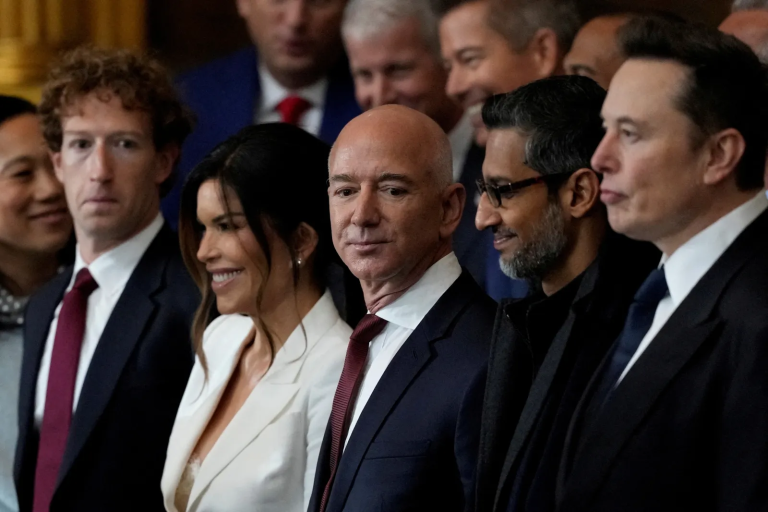
The attendees at U.S. President Donald Trump’s second inauguration included a typical cast of government officials, legislators, and cabinet nominees. What was not so typical was the crew of billionaires who also attended—and took center stage. The Meta CEO Mark Zuckerberg, the Amazon founder Jeff Bezos, the Google CEO Sundar Pichai, and the Tesla/SpaceX CEO Elon Musk were all seated one row behind Trump’s children and in front of many of his cabinet nominees, including Pete Hegseth, Robert Kennedy, Jr., and Kristi Noem. To many, the billionaires’ prominent placement—and the overtures they seemed to be making in anticipation of Trump’s swearing in—signified a new bargain between U.S. business elites and the president. Such a bargain is not just dangerous for a country’s democracy but also for the business elites who make it. And it brings the United States much closer to other countries in which alliances between government leaders and business tycoons are more typical.
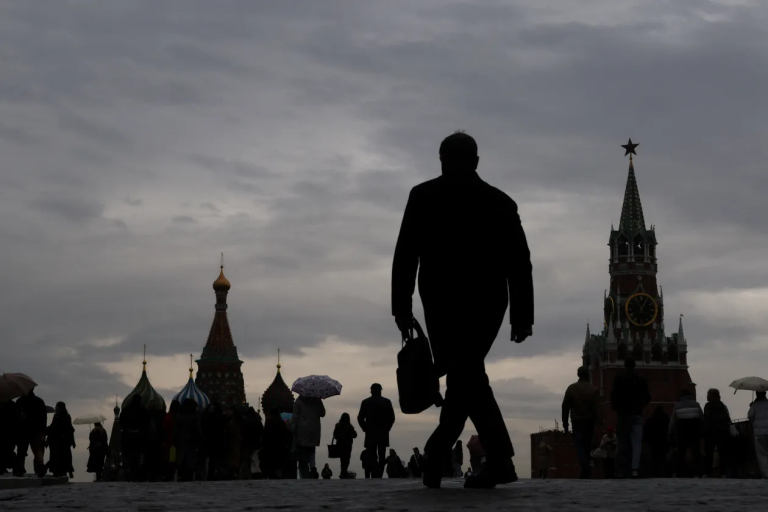
With good reason, many observers in the United States saw in Trump’s inauguration the enshrining of a new oligarchy. The term “oligarch” is more commonly associated with post-Soviet Russia. In the late 1980s, Soviet leader Mikhail Gorbachev’s major economic reforms, known as perestroika, allowed once nationalized and state-run industrial assets to increasingly make their way into the hands of politically connected managers and a nascent entrepreneurial class of business executives. The fall of the Soviet Union accelerated this transition, as economic mismanagement by Kremlin officials led to chronic cash shortages and forced the government to borrow money from private banks. As collateral, private bankers demanded stakes in major state-owned enterprises. When the government invariably defaulted, the banks gained control of the commanding heights of the Russian economy.
The owners of these banks—favored insiders such as Roman Abramovich, Boris Berezovsky, and Mikhail Khodorkovsky—used these bargain-basement takeovers to consolidate vast fortunes in oil, banking, media, and other sectors, which allowed them to exert powerful influence over Russia’s new president, Boris Yeltsin, and the Russian economy. Although many of these firms performed well and even helped Russia emerge from a financial crisis in 1998, the scheme produced a concentration of wealth and political power that hampered any true free-market reforms in the country.
But almost as quickly as they arrived on the scene, Russia’s oligarchs soon became political targets themselves. In the first decade of this century, with the tumult of the prior decade receding, Russia developed what scholars call an “authoritarian state capitalist” system: a nominally private economic system rife with state intervention designed to benefit an elite but still with institutions not yet entirely captured by that elite. Under authoritarian state capitalism, political leaders exist in an uneasy equilibrium, attempting to secure the levers of power in society that remain outside their control. These figures have to overcome the most important counterbalance to political power: economic power. Powerful and independent economic actors then become targets because their power prevents complete authoritarian consolidation.
Russia’s oligarchs are the world’s most notorious, but other countries with authoritarian state capitalist systems, from Saudi Arabia to Turkey, have their own. Elites around the globe imagine that they are immune to the convulsions that come with tremendous political change, believing that their fortunes and their networks will sustain them. But just as cozying up to autocrats can help enrich and empower elites, so, too, can it lead to their downfall.
HOW THE MIGHTY HAVE FALLEN
Throughout the 1990s, Yeltsin increasingly relied on his oligarchs to govern effectively and as a result, they gained greater influence over the Russian economy, economic policy, and the halls of political power. When Vladimir Putin became Russia’s president in 2000, he embarked on a mission to constrain them. The “mob” of the 1990s, in the words of the political scientist Jordan Gans-Morse, gave way to “the man.” Over the course of Putin’s first presidential term, Berezovsky, Vladimir Gusinsky, and Vladimir Potanin all faced investigations and, in many instances, had their assets seized by a resurgent state apparatus. In 2003, Putin jailed Khodorkovsky—who had acquired an oil and gas company from the Russian government and was one of the world’s richest men—on charges of fraud and tax evasion. Many interpreted the move as a “declaration of war” against the oligarchs and a “shock for those who had come to believe in the ‘new Russia,’” as the economist Marshall Goldman wrote in Foreign Affairs in 2004. Businesses that had once manipulated the state began to fear it.
Criminality in the murky days of the 1990s, however, was not what drove Putin to seek the oligarchs’ ouster. After all, they had supported the budding authoritarian state capitalist system in hopes of securing a role in running it. Berezovsky, for example, was instrumental in Putin’s ascension to power, providing public backing and funding for the president’s Unity Party. But Putin, a former KGB officer, was determined not to seem weak, as Yeltsin did, and immediately sought to reassert the power of the Russian state after he came into office. Promising to stay out of politics was not enough to protect an oligarch, as some had assumed. As the political scientist Richard Sakwa wrote in 2008, “while business was now taken out of politics, politics entered ever more decisively into business.” The only oligarchs that could remain were those that the state allowed.
By stripping the post-Soviet oligarchs of their assets, Putin could refill state coffers and distribute the extra spoils among his own new ruling elite, thereby creating a new oligarchy that was wholly dependent on his whims and desires. After the 2012 presidential election, which was marred by widespread allegations of fraud and mass protests against the regime, this system became hypercentralized and even more dependent on Putin. Fealty to Putin, rather than managerial expertise, became and remains the key criterion for success. The consequences of failing to adhere to this compact can be deadly. There seems to be nothing as dangerous to a high-profile Russian business executive as an open window. The list of suspicious deaths just since the invasion of Ukraine in 2022, when Putin began to further narrow his inner circle, has warranted its own Wikipedia page. In September 2022, Ravil Maginov, the chair of the oil giant Lukoil, fell from a hospital window in a room in which, by an eerie coincidence, the security cameras were not functioning. Three months later, Pavel Antov, who owned one of Russia’s largest meat processors, fell from a hotel window in India. Since the start of Russia’s war in Ukraine, dozens of members of Russia’s business elite have died under unusual circumstances.
NOBODY IS SAFE
The downfall of Russia’s oligarchs has been extreme, but it is not altogether unique. In authoritarian state capitalist systems, such as those in Saudi Arabia and Turkey, the state has clamped down on business leaders—though investigations, regulatory pressure, asset seizures, forced sales, or political ostracization—when they are suspected of disloyalty to the regime. In 2009, the Turkish government fined one of the country’s largest media companies, the Dogan Media Group, $2.5 billion for tax infractions—a move The New York Times later noted as being “widely seen as an attempt by the Turkish government to punish [the company] for its criticism” of Recep Tayyip Erdogan, who was prime minister at the time and is now the country’s president. Aydin Dogan, the group’s owner, was forced to sell two of the newspapers the company owned, and in 2018, after continued scrutiny and pressure, he sold the whole company to a pro-government conglomerate. After a 2016 coup attempt against Erdogan, the Turkish government seized the assets of over 1,000 companies whose leaders were suspected of being sympathetic to the opposition. Since then, and especially in the last two years, this practice has only broadened. The future for oligarchs in Turkey, as in Russia, is dependent entirely on the whims of the authorities.
In Saudi Arabia, the monarchy carefully manages business activities to align with its objectives. In 2017, as many as 500 business executives, former government officials, and princes arrived at Riyadh’s Ritz-Carlton for meetings with Crown Prince Mohammed bin Salman, known as MBS. The hotel became their jail. Many were detained in separate hotel rooms, interrogated, and in some cases tortured. Some were forced to transfer their assets to the state coffers. The prominent investor Prince Alwaleed bin Talal, who had worked with the journalist Jamal Khashoggi (who would be murdered by Saudi agents the following year), was detained for 83 days before settling with the monarchy for a sum in the billions of dollars. The Saudi government painted the operation as part of an anticorruption campaign, which it continued through 2019. But many observers have insisted that the exercise was truly about consolidating MBS’s rule and power.
The fate of these men should serve as a warning to business leaders who choose to get into bed with authoritarians—or those who simply choose to operate comfortably at arm’s length. Such a gamble may offer big payoffs in the short run, but it can backfire spectacularly in the long run. Some American business leaders are coming dangerously close to meeting this same fate.
AMERICAN OLIGARCHY
The United States is not Russia, Turkey, or Saudi Arabia, but as a variety of civil society organizations and democracy scholars have noted, it is experiencing steady democratic backsliding, a process marked by steep political polarization, the expansive use of executive power, and challenges to speech and dissent. This trend manifests in part in what has come to be known in the United States as “lawfare,” when leaders use legal prosecution as political punishment against particular individuals or institutions they see as disloyal. Although such practices have grown in the United States in the past two decades, they have exploded under Trump. The president has launched widespread attacks on his political opponents, business leaders, and media outlets that he sees as too critical of his administration. Trump has on various occasions since 2017 called the media “the enemy of the people.” His first administration frequently attacked Bezos, who also owns The Washington Post; Les Moonves, who served as chair of CBS News until 2018; and Bob Iger, CEO of the Walt Disney Company, which owns ABC News, for news coverage perceived as unfair to Trump.
As Trump’s second term began, many prominent business and media leaders attempted to cozy up to the president. The tech giants of Silicon Valley offer the clearest case in point. During Trump’s first administration, most of these leaders kept their distance from Trump or even criticized him. But before Trump returned to office, they began changing their tune. Musk was the largest individual donor to the Trump campaign and its affiliated super PACs during the 2024 election cycle. Shortly before The Washington Post editorial board planned to endorse Kamala Harris for president, the newspaper ended its practice of endorsing presidential candidates, a move that 21 of the paper’s columnists decried as an “abandonment of the fundamental editorial convictions of the newspaper.” A few months later, Zuckerberg announced that he would end his company’s social media fact-checking program, which it had started in 2016. Zuckerberg said that fact checkers had been “too politically biased” and that there had been “too much censorship”; Trump, when asked by a reporter whether the changes were a response to his past threats, said, “Probably.”
A charitable view of these business leaders would suggest that they were trying to hedge their bets during a routine change of power. But given the president’s willingness in the year since to launch vindictive attacks against all manner of targets, these moguls have now become complicit in the rise of a new authoritarian state capitalism.
Bezos, Musk, and Zuckerberg’s prominent placement at Trump’s inauguration underscored their close association with the president, and Musk even became a “special government employee” chosen to lead the Department of Government Efficiency. But as political leaders personalize and centralize power, independent wealth can become a threat. In turn, political leaders demand greater loyalty from their cronies, which often requires them to increasingly compromise themselves—and to suffer greater consequences once they decide the tradeoffs are no longer worth it. As Russia’s oligarchs have learned, cozying up to political leaders offers only short-term forms of protection. The second Trump administration has stepped up attacks on those Trump perceives as critical of his administration. Since 2018, Trump has sued ABC News, TheWall Street Journal, The New York Times, the BBC, CNN, and the Des Moines Register, among others. The takeover by David Ellison, a Trump ally, of CBS in 2025 and his imminent acquisition of Warner Bros. Discovery, which includes the broadcaster CNN, has heightened the impression that the president is bent on using his relationship with powerful business leaders to consolidate his own control of the country.
But such alliances can prove tricky. Musk fell from grace just five months into Trump’s second term, as he criticized Trump’s landmark spending bill. Musk ultimately emerged mostly unscathed, but Trump demonstrated a clear willingness to exert serious financial pressure on the entrepreneur, threatening to revoke government contracts for Musk’s companies, which led shares of Tesla to drop by 14 percent. There is no doubt that Trump appreciates the overtures of business leaders and may even reward them in meaningful ways. But authoritarian state capitalists are more concerned with enriching themselves and their ruling clique than helping friendly oligarchs. Such leaders tolerate private enterprise only as long as it does not interfere with their efforts to amass and maintain their own political and economic power.
COURSE CORRECTION
Why sound the alarm bell for elites who have contributed to their country’s democratic decline? Because economic elites are crucial actors in reversing that decline. Although countries that begin inching toward authoritarian state capitalism can march on toward full-blown authoritarianism, as Russia has, that path is not inevitable. Economic actors can pull a country away from authoritarianism and back toward democracy in one of two ways: if the elites double down on their respect of democratic institutions, thereby helping those institutions rein in both public and private power, or if elite overreach and self-enrichment creates a popular backlash that then provides an opportunity for business leaders to mend their ways and support democratic institutions and forces.
When the rule of law becomes rule by one person, everyone’s future depends on proximity to that person. As property rights and the rule of law weaken, volatility becomes the norm—investment slows, finance becomes more expensive, and supply chains are disrupted. Business leaders are well positioned to speak out about the dangers of these dynamics. In the United States, prominent business leaders have, on occasion, convinced Trump to pull back on certain policies. After a number of executives, including the JPMorgan Chase CEO Jamie Dimon, spoke out about the potential damage of the president’s tariffs, Trump announced a 90-day pause on the tariffs and praised Dimon for being “very smart and . . . a genius financially.”
Concerned business leaders should strive to coordinate their responses to government excesses. By messaging resistance or alarm through business associations, for example, individuals can reduce the risk of a targeted government backlash. They could also form ties with business leaders in other industries and sectors who are similarly interested in safeguarding economic stability and growth; such a broader network could help insulate individuals from accusations of behaving in politically motivated ways. These networks should not limit their activity to economic matters, however. They must also use their influence and expertise to defend core democratic practices, such as free and fair elections and freedom of the press.
The system of Western democratic capitalism has lost many of its champions, with a dogged focus on its inadequacies often overshadowing its successes. Many across the ideological spectrum might rejoice in seeing some capitalist titans fall. But this cautionary tale is not about ideology, left or right, but institutional erosion and the rise of competitive authoritarianism. Everyone has an interest in seeing business leaders commit to democratic practices and institutions, no matter which party is in power. The alternative is a political environment in which everyone has fewer rights and less freedom—including, sooner or later, the oligarchs. This is the real lesson of Russia, where the oligarchs are gone but the deleterious effects of their choices to support an unjust system remain.
CHRISTOPHER A. HARTWELL is Professor of International Business Policy and Head of the International Management Institute at the Zurich University of Applied Sciences School of Management and Law and a Professor at Kozminski University. TRICIA D. OLSEN is Professor of Global Public Policy and Political Science and Harold E. Stassen Chair at the University of Minnesota’s Humphrey School of Public Affairs.
Courtesy: The foreignaffairs .

प्रतिक्रिया दिनुहोस्